
City guides
What to Buy in Baku: Souvenirs and Gifts Worth Taking Home
The things actually worth bringing back from Azerbaijan, what they cost, and what will not survive customs.
Everyone arrives at the same problem near the end of a trip. You have a list of people at home, a limited amount of luggage, and a great many shops selling identical fridge magnets stamped with the Flame Towers.
Azerbaijan is unusually good for gifts if you know what to look for, because several of its craft traditions are still living rather than preserved, and because its food exports well. This is a list of what we actually recommend to the people in our vehicles, sorted by who you are buying for, with the practical warnings that matter.
The short version
- Kelagayi silk scarves are the best single gift in the country. Light, unbreakable, UNESCO recognised, and unmistakably Azerbaijani.
- Sheki halva and good saffron are the food gifts that travel best and survive a suitcase.
- Pomegranate appears in everything here, from preserves to sauce to wine, and narsharab sauce is the most underrated thing you can carry home.
- Antique carpets need an export certificate. Caviar needs licensed packaging and CITES labelling.
- Avoid anything described as caviar at a bazaar, and be sceptical of very cheap saffron.
Kelagayi silk scarves and the buta motif
If you buy one thing, buy this. The kelagayi is a square silk headscarf, block printed by hand using wooden stamps and natural dyes, in patterns built around the paisley motif called buta that runs through all Azerbaijani design. UNESCO inscribed the craft on its intangible heritage list, which is a reasonable proxy for both authenticity and the fact that the tradition is fragile.
They are practical in a way most souvenirs are not. They weigh nothing, they cannot break, they fold into a corner of a bag, and they work as a gift for almost any adult woman regardless of whether she has any interest in Azerbaijan. The colours carry meaning in traditional use, with brighter shades worn by younger women and darker ones by older, though nobody expects a visitor to observe this.
The pattern on almost every one is built around the buta, the teardrop with a curved tip that runs through all Azerbaijani design. It is the motif that travelled west along the trade routes and became what Europe calls paisley, and once you have noticed it you will find it on carpets, tilework, jewellery and the manat notes in your pocket.
The genuine article comes from Basqal, a village in the Ismayilli region that has printed silk this way for centuries, and from Sheki. In Baku, the Old City shops carry them and quality varies. Hand printed pieces show slight irregularities in the stamping, which is the point rather than a flaw, and the reverse of a real one carries the dye almost as strongly as the front. Screen printed imitations are sharper, flatter and much cheaper. If your itinerary passes through Ismayilli, buying at the workshop in Basqal removes the question entirely.
Food, which is what most people actually want
Sheki halva is the standout. Made in Sheki from fine rice flour threads layered with nuts and syrup, it is dense, faintly floral and completely unlike Turkish or Greek halva. It keeps for weeks, it survives a suitcase if boxed, and it is the thing people ask you for the second time you visit.
Saffron is the serious buy. Azerbaijan grows its own in the Absheron region and it is sold at a fraction of European prices. Buy threads rather than powder, because powder is where adulteration hides. Real saffron is deep red with slightly paler ends, releases colour slowly in warm water rather than instantly, and if it is remarkably cheap it is not saffron. A small box is a genuinely luxurious gift for anyone who cooks.
Narsharab, which you will also see written as nar sharab, is the underrated one. It is pomegranate juice reduced to a thick, sharp, dark syrup, used here on fish and kebab, and there is no good substitute for it at home. A bottle costs very little and it converts everyone who tries it. Pack it in a sealed bag inside a shoe, because the bottles are not always robust.
Then the preserves and the tea. Azerbaijani jams made from whole fruit, particularly white cherry, fig, quince and the black walnut version, come in jars that photograph beautifully and taste like nothing in a supermarket at home. Azerbaijani black tea, often sold with dried rose or thyme blended in, is cheap and good. Dried fruit and nuts from Teze Bazar cost a fraction of European prices and make substantial, inexpensive gifts for a large family.
Pomegranate wine is a reasonable novelty but be realistic: it is sweet, it divides opinion, and the country's conventional wines from Shamakhi and Ganja are better drinking. Check your destination's alcohol import allowance, which is the usual constraint.
Carpets and textiles
An Azerbaijani carpet is the serious purchase, and it is a real one rather than a tourist object. The weaving tradition has distinct regional schools, Quba, Shirvan, Ganja, Karabakh and Tabriz among them, each with recognisable patterns and colour palettes, and the craft carries its own UNESCO listing.
Spend an hour in the Carpet Museum before you shop. It is the single most useful preparation available, because it teaches your eye the difference between a serious piece and a decorative one, and it is much harder to be sold something misdescribed afterwards.
A good dealer will show you the back, count knots with you, tell you the school and be straightforward about age. New carpets are the overwhelming majority of what is sold, are unrestricted for export, and are still excellent objects. Old carpets are cultural property and require an export certificate, which a reputable dealer arranges and supplies. Never buy an antique piece from someone who dismisses that question.
For something smaller and cheaper, the flat woven kilims and the jajim textiles are the same tradition at a fraction of the price and the weight. So are embroidered tablecloths and the small woven bags that were originally saddle pieces.
Copper, ceramics and the workshop crafts
Lahij, a mountain village in the Ismayilli region, has been a coppersmithing centre for centuries and still is. The plates, trays, jugs and coffee pots are hammered by hand, frequently while you watch, and carry engraved patterns particular to the village. This is the most atmospheric shopping in the country and the objects are correspondingly hard to buy elsewhere. They are heavy, so plan luggage accordingly.
The armudu tea glasses are the small version of the same idea. A boxed set of the waisted glasses with a copper or silver coloured holder is compact, inexpensive, unmistakably from this part of the world, and actually used by the people you give it to, which most souvenirs are not.
Ceramics from the mountain towns, and the blue and white patterns associated with Quba and the north, fill the same role at a lower price point. Wrap them properly, because Azerbaijani packing is optimistic.
Buying by recipient
For parents and older relatives: a kelagayi scarf, a box of Sheki halva, and a jar of white cherry jam covers it, and all three fit in a shoebox.
For someone who cooks: saffron threads, a bottle of narsharab, and sumac or the dried barberries used in plov. This is the gift that gets used rather than shelved, and it costs very little.
For a colleague or a neighbour, where the obligation is light: Azerbaijani tea, a small bag of dried fruit from the bazaar, or a boxed pair of armudu glasses.
For children: the pomegranate themed items are genuinely charming here rather than cynical, and the small hand painted wooden pieces from the mountain towns beat anything sold near the Old City gates.
For yourself: the carpet, if you are going to. People regret the one they did not buy far more often than the one they did.
What to avoid
Caviar bought casually. Azerbaijan's association with Caspian caviar is real, but the legal route is narrow: a licensed seller, a sealed tin, intact CITES labelling, and a small personal quantity. Caviar sold loose at a bazaar or offered by an individual cannot legally leave the country or enter yours, and confiscation is the normal outcome. Check your own country's allowance before buying at all.
Very cheap saffron, which is safflower or turmeric dyed to look the part.
Anything genuinely antique bought informally, including coins, icons and manuscripts, which are restricted cultural property.
The mass produced souvenirs immediately outside the Old City gates, which are the same items at two or three times the price they carry three streets further in.
Where to buy, and how a tour helps
In Baku, the Old City for crafts and carpets, Teze Bazar for food, spices, nuts and tea, and the malls only for packaged goods and the convenience of a supermarket.
The better versions of almost everything on this list come from outside the capital, which is the practical argument for building shopping into a tour day rather than leaving it to the last afternoon. Kelagayi silk from Basqal, copper from Lahij, halva from Sheki, and honey and preserves from the Gabala forests are all cheaper and unambiguously authentic at source.
Because our tours are private and priced per vehicle, a workshop stop costs you time rather than money, and the vehicle carries what you buy for the rest of the day instead of you carrying it. Say so when booking and we will build the route through the right places. The Grand Azerbaijan Tour already passes most of them.
Frequently asked questions
What is the best souvenir from Azerbaijan?
A kelagayi silk scarf. It is hand block printed using a UNESCO recognised technique, it is light and unbreakable, and it works as a gift for almost anyone. The genuine articles come from Basqal and Sheki, and hand printed pieces show slight irregularities in the stamping.
What is a buta?
The teardrop motif with a curved tip that runs through all Azerbaijani design, from carpets and silk to tilework and the banknotes. It travelled west along the trade routes and became the pattern Europe calls paisley. It is the single most recognisable Azerbaijani decorative element and appears on most things worth buying here.
Where is kelagayi silk made?
Basqal, a village in the Ismayilli region, and Sheki. Both are reachable on a touring day heading west from Baku. Buying at the workshop removes any doubt about whether a scarf is genuinely hand block printed, and costs less than the same piece in an Old City shop.
What food can I bring back from Baku?
Sheki halva, saffron threads, narsharab pomegranate sauce, whole fruit jams, Azerbaijani black tea, and dried fruit and nuts from the bazaar. All of these travel well. Check your own country's rules on importing food before you buy.
Is saffron cheap in Azerbaijan?
Considerably cheaper than in Europe, since it is grown in the Absheron region. Buy threads rather than powder, since powder is where adulteration hides. Real saffron is deep red, releases its colour slowly in warm water, and is never remarkably cheap.
Can I take caviar out of Azerbaijan?
Only in a small personal quantity, bought from a licensed seller, in a sealed tin with intact CITES labelling. Caviar sold loose at a bazaar cannot legally be exported and is likely to be confiscated on arrival. Check your destination country's allowance first.
Where is the best place to buy souvenirs in Baku?
The Old City for crafts and carpets, and Teze Bazar for food, spices, nuts and tea. Avoid the stalls immediately outside the Old City gates, which sell the same mass produced items at two or three times the price found a few streets further in.
How much should I budget for gifts in Azerbaijan?
Very little by European standards. Tea, jams, dried fruit, narsharab and armudu glasses are all inexpensive, and a good silk scarf or a box of saffron is modest. Carpets are the exception and can run to any figure, since they are a serious purchase rather than a souvenir.
Places mentioned in this guide
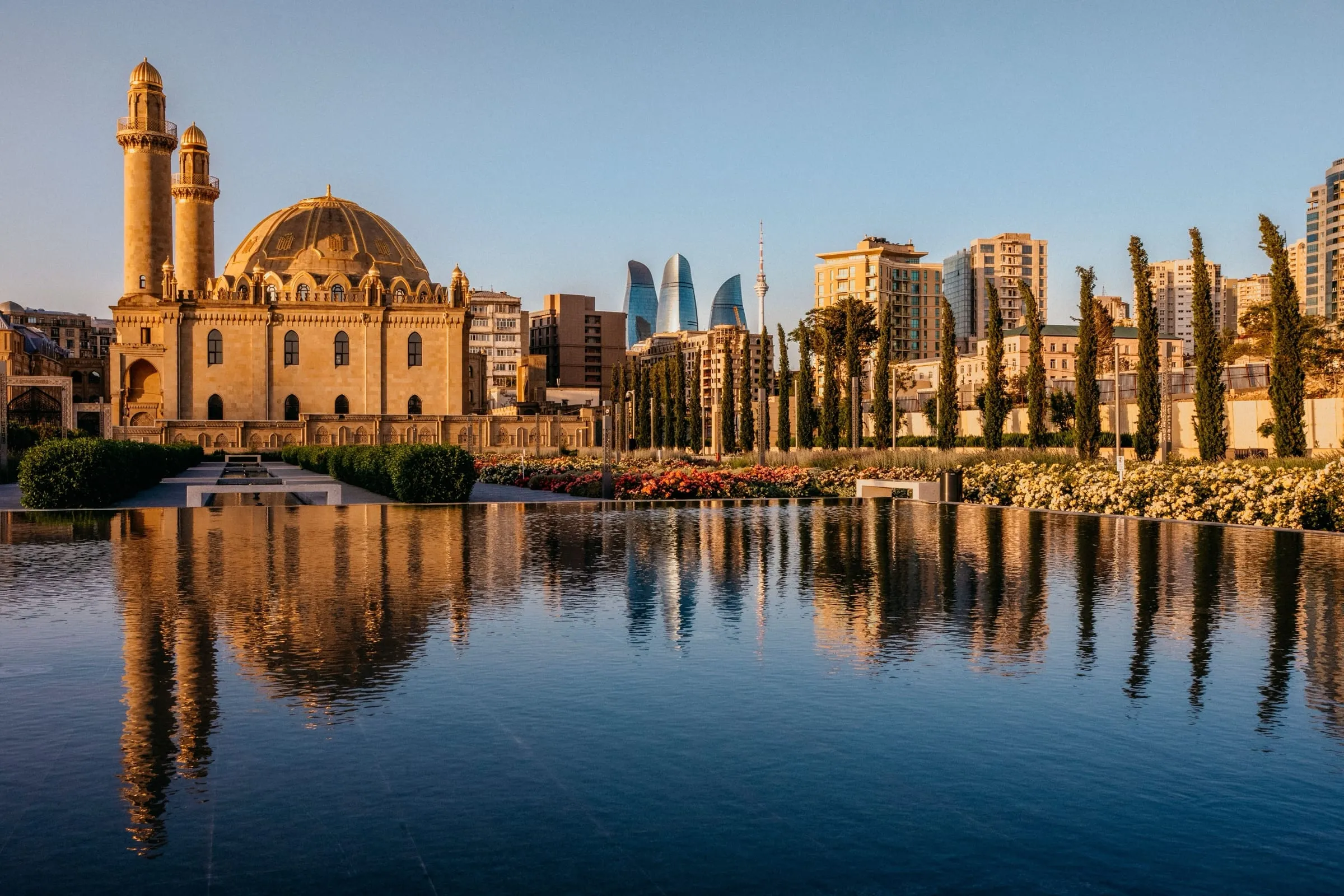
Baku
Azerbaijan's capital on the Caspian. A UNESCO-listed walled Old City ringed by modern towers and seafront parkland.
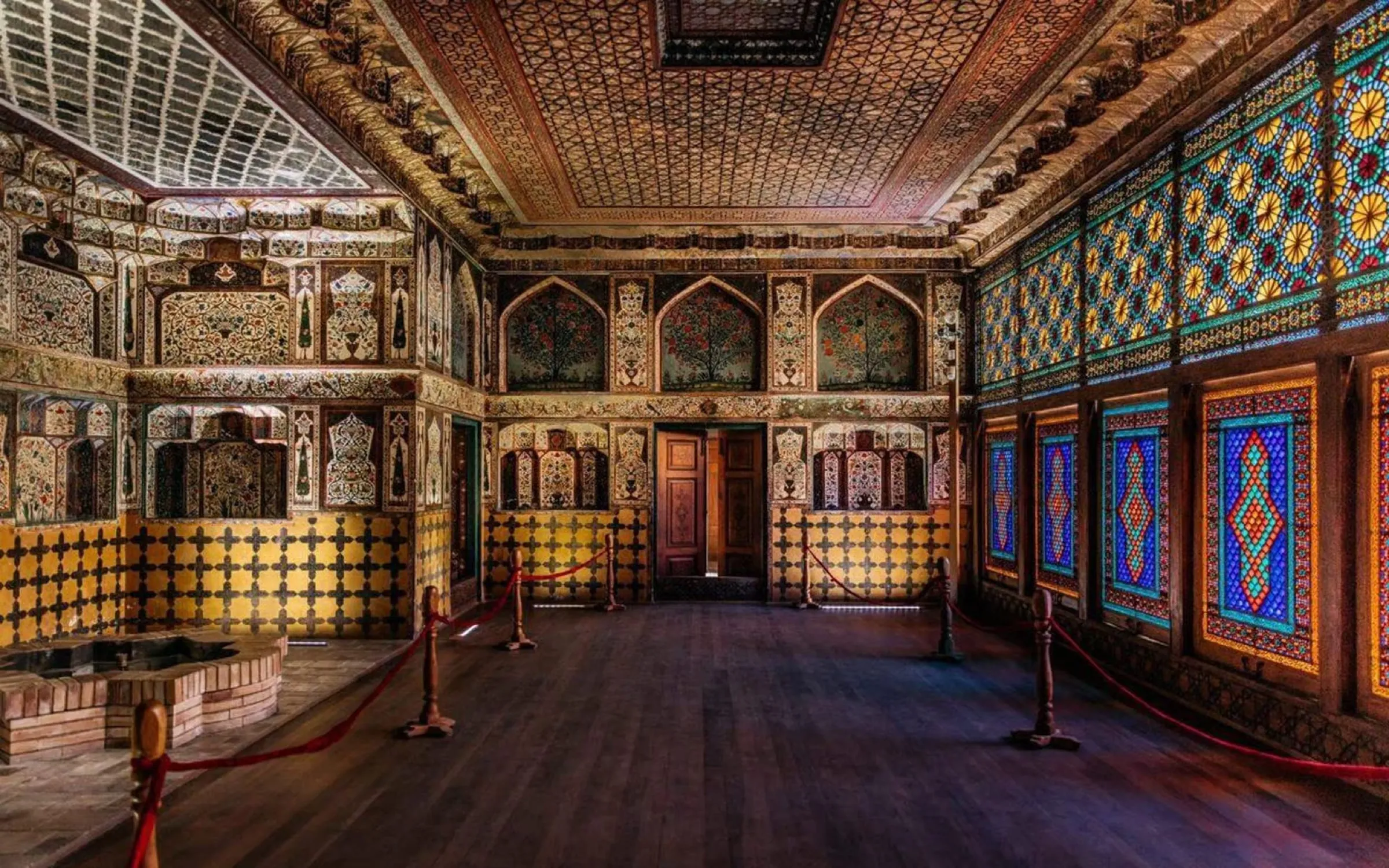
Sheki
UNESCO-listed Silk Road town in the Caucasus foothills, famous for the Khan's Palace and its stained-glass shebeke windows.
Included in 2 tours
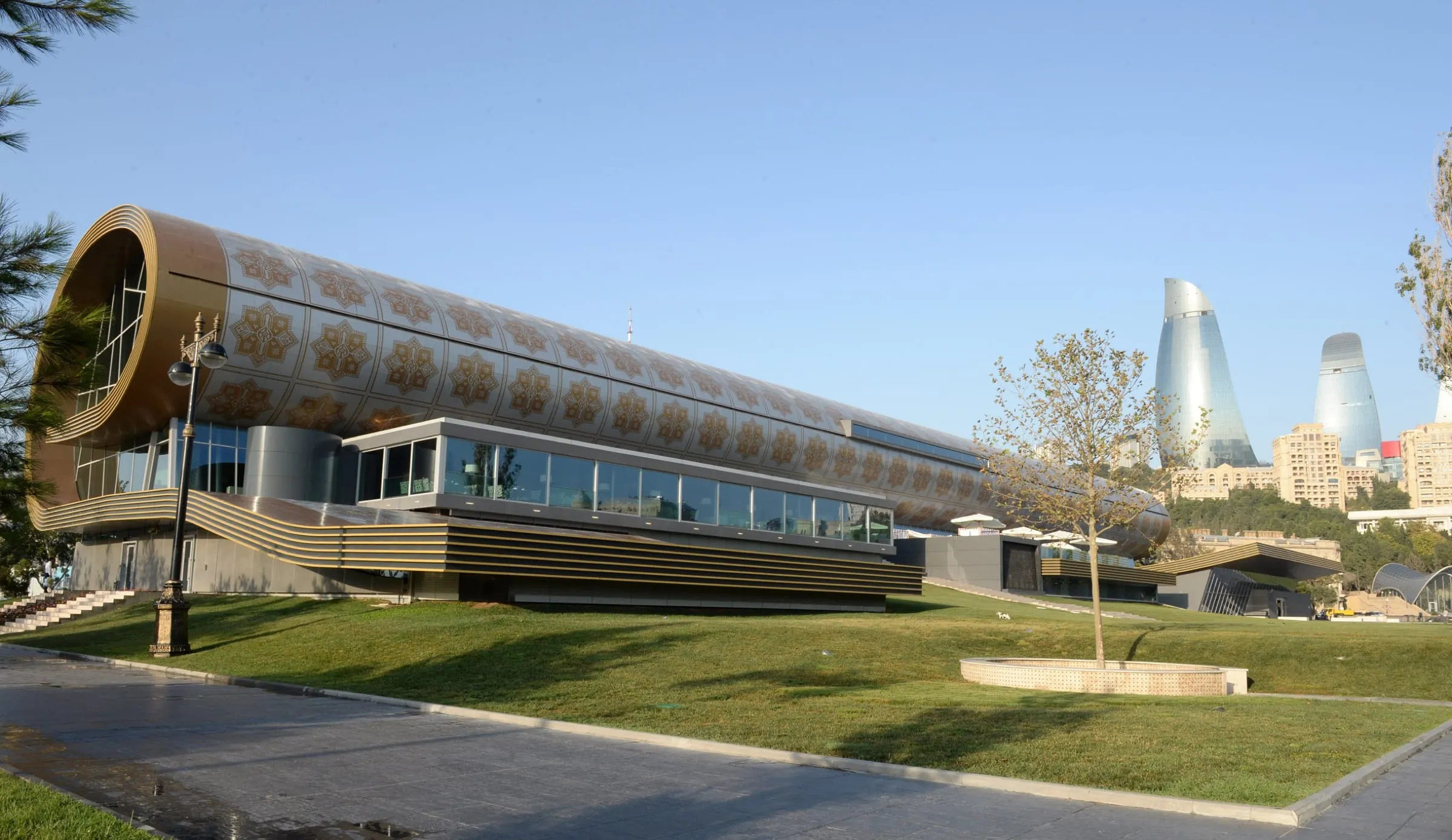
Azerbaijan National Carpet Museum
The world's first museum dedicated to carpets, in a building shaped like a rolled rug on the Baku seafront.
Ready to plan your trip?
Tell us your dates and group size and we will put together the right itinerary and vehicle.
Or call +994 77 199 17 55 , 08:00 to 20:00, 7 days a week