
Practical
Getting Around Baku: Metro, Buses, Taxis and the BakiKart
Every way to move around the city, what each costs, and the card you need before any of it works.
Central Baku is compact and walkable, and for the first day most visitors need nothing else. Beyond that core the city spreads a long way, and the choices become a metro that is cheap and good, buses that go everywhere, taxis that are inexpensive, and apps that are cheaper still.
There is one thing to sort out before any of the public options work, and almost nobody tells you about it in advance. You cannot pay cash on a bus or at a metro gate. You need a card.
The short version
- The BakiKart is a rechargeable card and it is required for both the metro and the buses. No cash.
- The metro is cheap, clean and fast, with a handful of genuinely beautiful stations.
- Buses cover far more of the city than the metro and use the same card.
- Ride hailing is cheaper than street taxis and Bolt is the app most used.
- The funicular up to Highland Park is the one piece of transport that is also a sight.
- Driving yourself in the city is possible and rarely worth it.
The BakiKart, which you need first
The BakiKart is a plastic rechargeable travel card, and it is the only way to pay for the metro and the buses. Drivers do not take cash, the gates do not take coins, and there is no contactless bank card option you can rely on.
You buy one from a machine or a kiosk in any metro station, pay a small deposit for the card itself, then load credit onto it. The machines have an English option. Top up with notes at the same machines as you go.
One card can usually be used for more than one person on the buses by tapping twice, which is useful for a couple, though on the metro each person needs their own tap through the gate. If you are here for a few days, load more than you think you need: the fares are so low that the top-up is trivial and running out at an awkward moment is not.
This single piece of information solves the most common transport frustration visitors have in Baku, which is standing at a bus door holding money the driver will not take.
The metro
Baku's metro is Soviet-built, deep, clean and genuinely fast, and the fare is among the cheapest of any system you will use. For moving along the main axes of the city it beats everything else, traffic included.
The network is not large and it does not reach everywhere a visitor wants to go, but it covers the central area, the main railway station, the big shopping centres at 28 May and Ganjlik, and several residential districts.
Some of the stations are worth seeing in their own right. The older ones carry the chandeliers, marble and mosaic work of the Soviet metro tradition, and Nizami station in particular is the one people photograph.
Trains run frequently and the system is easy to navigate, with station names in Latin script as well as Cyrillic on most signage. Announcements are in Azerbaijani. Keep an eye on the line colour rather than relying on hearing your stop.
Buses
The bus network goes where the metro does not, which is most of the city. Routes are numerous, buses are frequent on the main corridors, and the same BakiKart pays for all of it.
There are express routes connecting the airport and some longer-distance services as well as the ordinary city network. Mapping apps handle Baku buses reasonably well, which is the practical way to work out which number you want.
The limitation is traffic. Baku moves badly at peak times and a bus sits in the same queue as everything else, so for a journey where timing matters the metro or a taxi is the safer choice.
Taxis and ride hailing
Taxis are inexpensive by European standards and plentiful. The distinctive purple London-style cabs are the official city taxis, and they run on a meter.
Ride hailing is usually cheaper and removes the negotiation entirely. Bolt is the app most widely used in Baku, with a price agreed before you accept. The practical catch is that you need working mobile data, so sort a SIM or an eSIM early.
The thing to avoid is the unmetered street pickup, particularly at the airport and around the tourist streets of the Old City. Drivers who approach you rather than being hailed are the ones who quote a number at the end. Use the rank, the meter or an app.
Tipping is not expected. Rounding up is normal and plenty.
The funicular, and walking
The funicular from the Boulevard up to Highland Park is the one piece of transport that doubles as a sight. It takes a few minutes, costs almost nothing, and saves a long steep climb to the best view in the city. Hours vary by season and it has closed for maintenance before, so check if you are depending on it.
Otherwise, walk. The Old City, Fountains Square, Nizami Street and the Boulevard form a continuous walkable core, and walking between them is faster than any vehicle and considerably more interesting.
Two warnings. Pedestrian crossings are treated as advisory by some drivers, and underpasses exist for a reason. And the Old City is cobbled and uneven, which matters in the wet and matters more in the wrong shoes.
Driving yourself
Self-drive is possible and, inside the city, rarely worth it. Baku traffic is assertive, lane discipline is interpretive, and parking in the centre is genuinely difficult, with paid zones and limited spaces around exactly the areas you want to be in.
Car rental desks operate at the airport and in the city. For a trip spent mainly in Baku, the combination of metro, walking and the occasional app car costs a fraction of a rental and removes the parking problem entirely.
Outside the city the calculation reverses, which is the next section.
Beyond the city, where it changes completely
Everything above applies to Baku. The moment you want Gobustan, the fire sites, the mountains or the Silk Road towns, public transport stops being a solution and becomes the obstacle.
Buses and shared minibuses reach the towns cheaply enough. What they do not reach is the sites, which sit some distance beyond wherever the bus stops, frequently on roads with no service at all. The petroglyphs, the mud volcano field, the Candy Cane valley, Lahic and Khinaliq are all like this.
Several of these also depend on being somewhere at a particular hour. Yanardag is a modest row of flames in daylight and a wall of fire after dark, and no timetable will accommodate that.
That is the honest case for a car with a driver, and it is why our own service exists. Inside Baku we would tell you to take the metro. Outside it, the metro does not go.
Frequently asked questions
Do you need a card for the Baku metro?
Yes. The BakiKart is a rechargeable travel card and it is the only way to pay for both the metro and the buses. Cash is not accepted on buses or at metro gates. Buy one from a machine in any metro station, pay a small deposit and load credit onto it.
What is a BakiKart?
Baku's rechargeable public transport card, required for the metro and all city buses. Machines in metro stations sell and top them up, and they have an English option. Fares are low enough that loading extra credit costs almost nothing.
Is the Baku metro good?
Yes. It is cheap, clean, fast and easy to navigate, and several of the older stations carry the chandeliers and mosaic work of the Soviet metro tradition. The network is not large, but it covers the central axes well and beats traffic.
Is Uber or Bolt available in Baku?
Bolt is the ride hailing app most widely used in Baku and is usually cheaper than a street taxi, with the price agreed before you accept. You need working mobile data to use it, so arrange a SIM or eSIM early.
Are taxis in Baku cheap?
Yes by European standards. The purple London-style cabs are the official city taxis and run on a meter. Avoid unmetered street pickups, particularly at the airport and around the Old City, where drivers who approach you tend to quote a figure at the end.
Is Baku walkable?
The central core is, and walking is the best way to cover the Old City, Fountains Square, Nizami Street and the Boulevard. Watch the crossings, since drivers treat them as advisory, and expect uneven cobbles in the Old City.
Should I rent a car in Baku?
For a trip spent mainly in the city, no. Traffic is assertive and central parking is difficult, while the metro, walking and occasional app cars cost a fraction. Outside Baku the calculation reverses completely, because public transport reaches the towns but not the sites.
Places mentioned in this guide
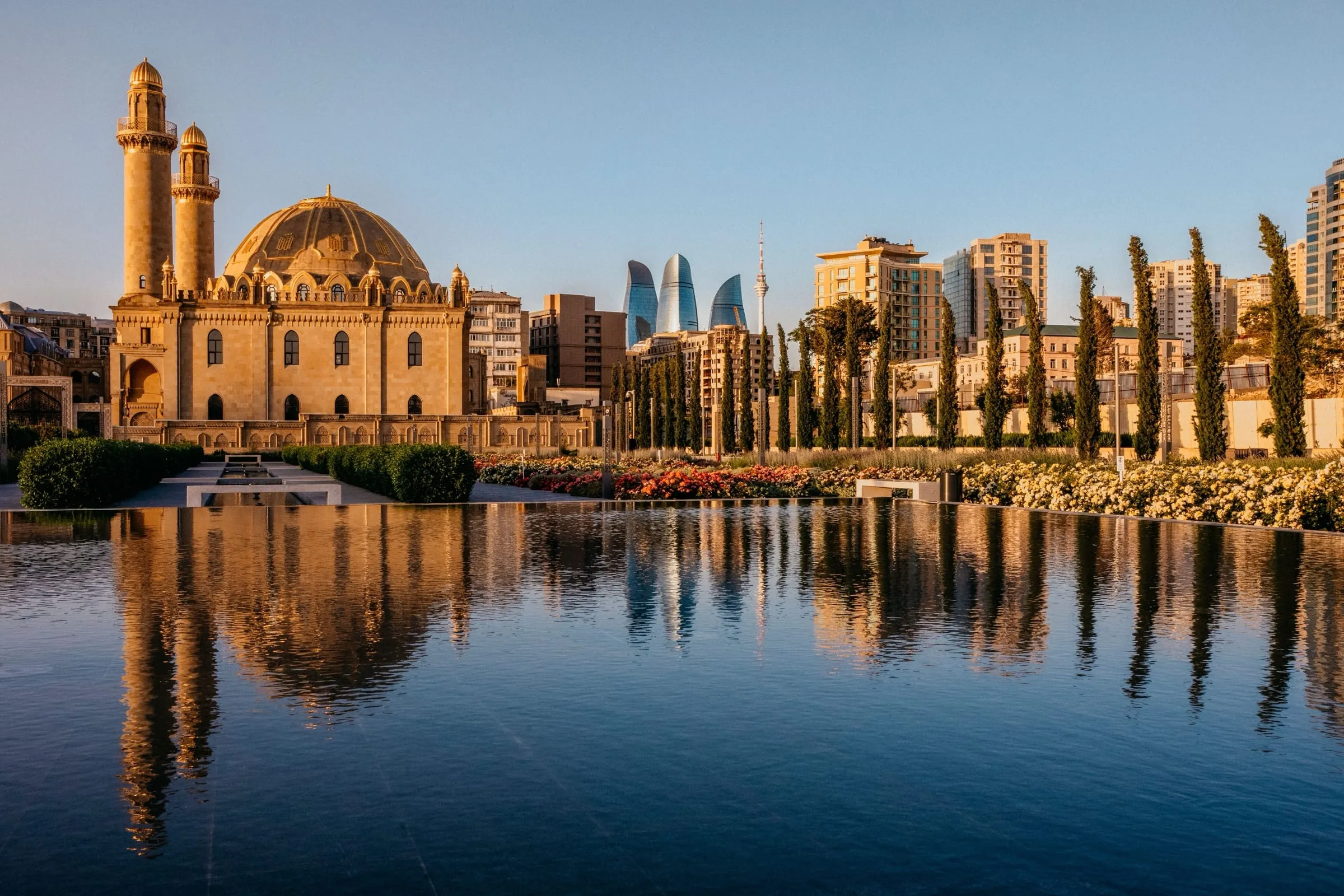
Baku
Azerbaijan's capital on the Caspian. A UNESCO-listed walled Old City ringed by modern towers and seafront parkland.
Baku Funicular
The short cable railway from the Boulevard up to Highland Park, and the easiest way to the best view in Baku.
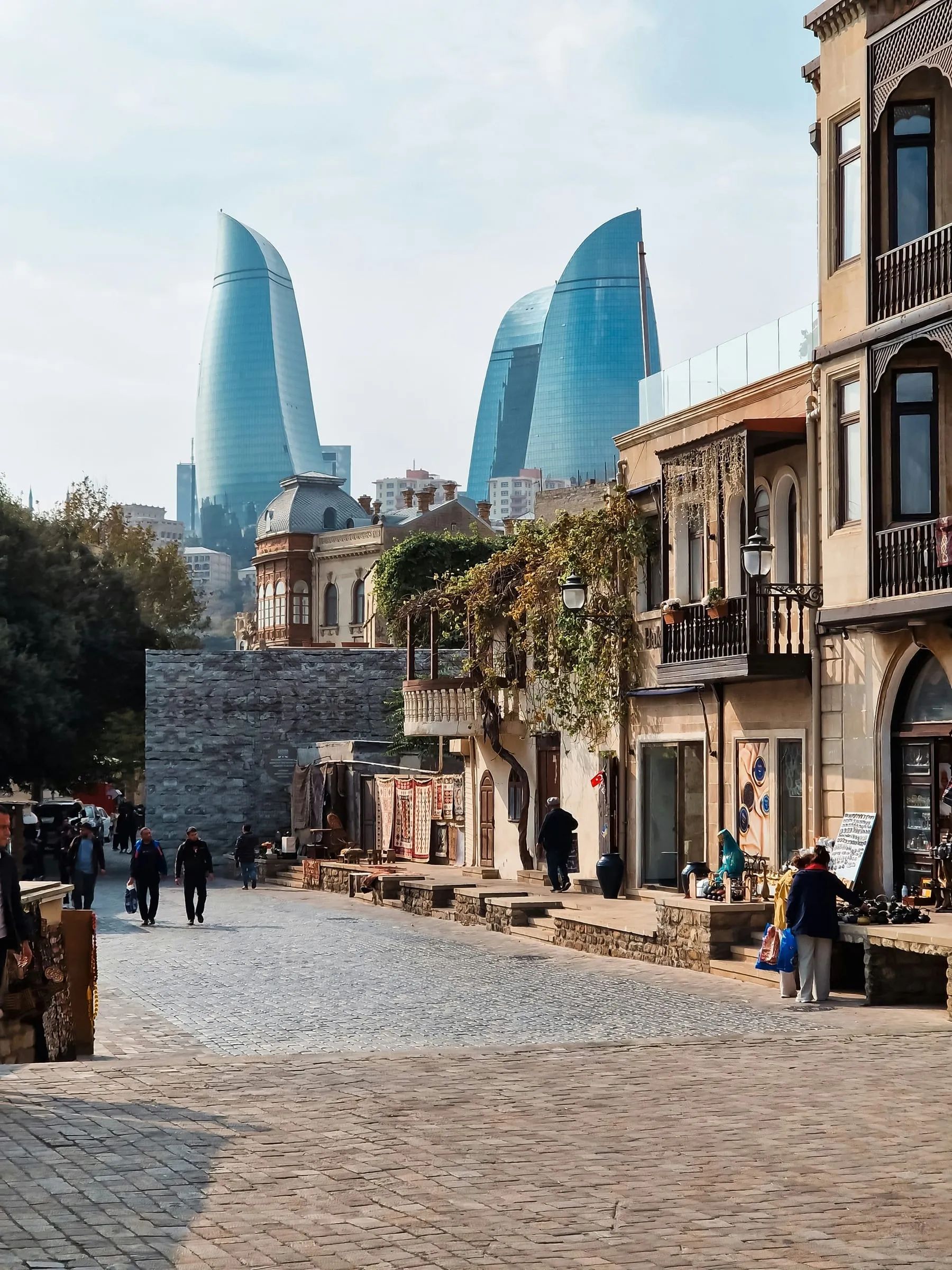
İçərişəhər, Baku Old City
The walled medieval core of Baku, a UNESCO World Heritage Site enclosing the Maiden Tower and the Palace of the Shirvanshahs.
Included in 6 tours
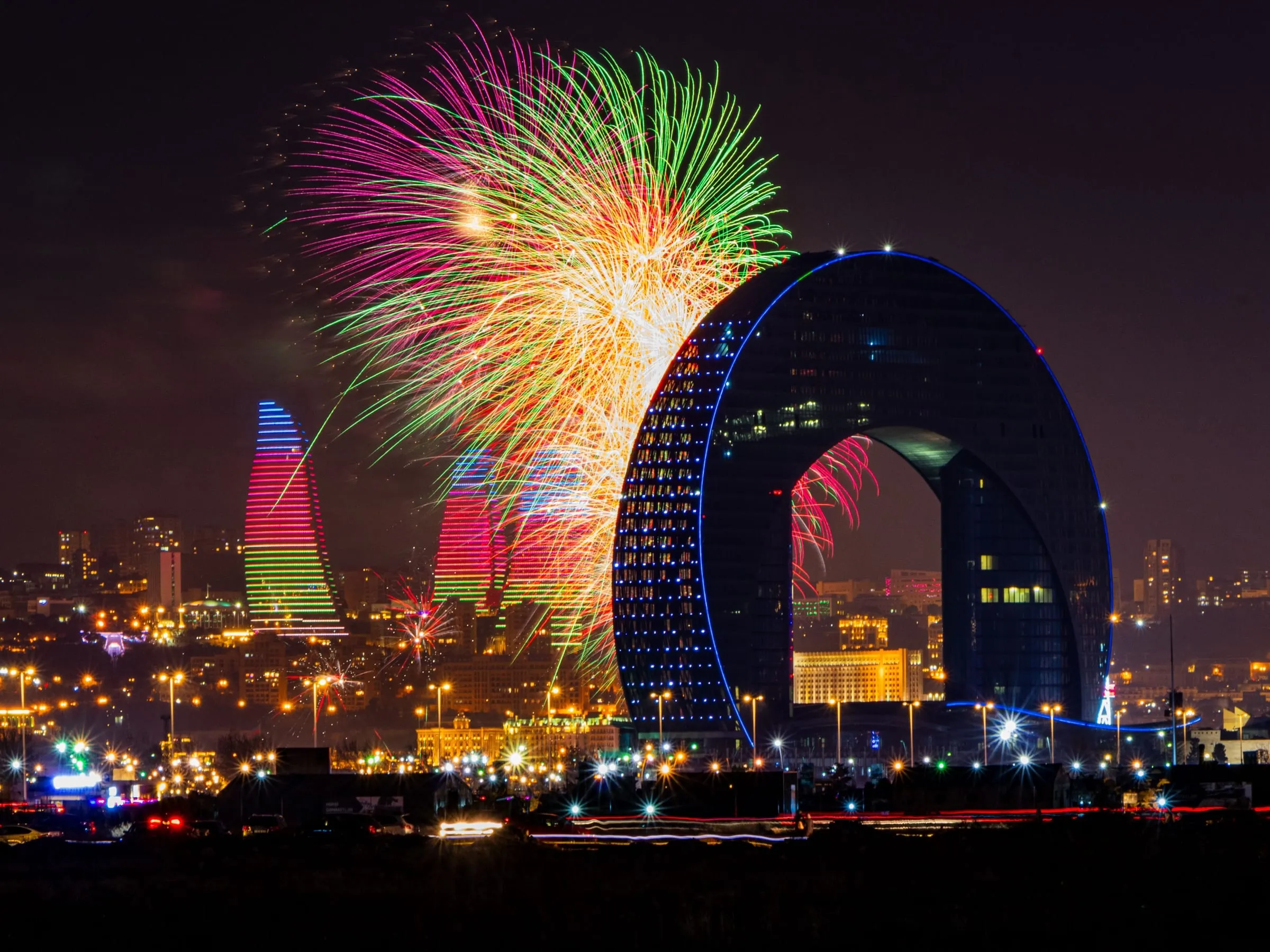
Baku Boulevard & Mini Venice
The Caspian seafront promenade. Parkland, canals, Flag Square and the Baku Eye.
Included in 6 tours
Ready to plan your trip?
Tell us your dates and group size and we will put together the right itinerary and vehicle.
Or call +994 77 199 17 55 , 08:00 to 20:00, 7 days a week