
City guides
Things to Do in Baku: What Is Worth Your Time
The sights that justify the trip, the ones that do not, and how to order a day so it works.
Baku is unusually easy to see. The historic core is walkable, the landmarks are close together, and one well ordered day covers the capital properly rather than glancing off it. That is rarer than it sounds and it is the reason the city works so well as a short stop.
What follows is ordered by how much we think each thing earns its place, rather than by geography or by what a ticket office would prefer. Our drivers take visitors to all of it every week and they have firm opinions about which stops people are glad they made.
The short version
- The Old City is the one unmissable thing, and it holds two of the three attractions most visitors name afterwards.
- Yanardag is worth far more after dark than in daylight, which is the single most useful piece of timing advice in this city.
- Gobustan is outside the city and needs half a day, but it is the stop people most often call their favourite.
- Most museums close on Mondays. Plan a Monday around the outdoor sites.
- The Boulevard is best in the late afternoon, when the heat drops and the city comes out.
The Old City, which is the whole reason to come
Icherisheher, the walled Old City, is a UNESCO World Heritage Site and still a living neighbourhood rather than a preserved shell. People live inside the walls, hang washing across the lanes and park badly on the cobbles. Walking it without a plan for an hour is a legitimate way to spend the time.
The Palace of the Shirvanshahs is the finest piece of medieval architecture in the country. Fifteenth century, built as the seat of the ruling dynasty, and made up of a palace, a burial vault, a mosque and a bathhouse arranged across terraces. Allow an hour and a half. The stone carving in the divanhane courtyard is the detail people photograph and the thing that stays with them.
The Maiden Tower is the other landmark inside the walls and nobody is entirely sure what it was for. Defensive structure, fire temple, astronomical observatory and religious site have all been argued seriously, and the ground floor may be older than the upper section by centuries. The climb is steep and the view from the roof, out over the rooftops to the bay, is the payoff.
One honest warning: the souvenir shops immediately inside the main gates sell the same mass produced items at two or three times the price you will find three streets deeper in. Walk past them.
Fire, which is the thing Azerbaijan is actually about
The country's name is tied to fire, and the two fire sites on the Absheron peninsula are what give the connection substance rather than slogan.
Yanardag is a hillside that has been burning continuously for centuries, fed by natural gas seeping through the rock. In daylight it is a modest row of flames against a scrubby slope and visitors are frequently underwhelmed. After sunset it is something else entirely, a wall of fire in the dark with the heat reaching you across the viewing area. The site is the same; the experience is not comparable. If you can arrange to be there in the evening, do.
Ateshgah is the fire temple at Surakhani, a pentagonal caravanserai built around a natural gas vent that drew Zoroastrian, Hindu and Sikh worshippers along the trade routes. The inscriptions around the cells are in Sanskrit and Punjabi, which tells you how far people travelled to pray at a hole in the ground that would not stop burning. It is a strange and genuinely moving place, and it takes about an hour.
Gobustan, the one people are gladdest they did
Gobustan is roughly an hour south of the city and holds petroglyphs carved over some twelve thousand years: hunting scenes, dancing figures, and the long reed boats that led Thor Heyerdahl to argue for a connection with Scandinavian rock art. It is a UNESCO site and the museum below the hill is genuinely good, with the carvings themselves reached on a walking trail above it.
The mud volcanoes nearby are the other half of the trip. Azerbaijan has a large share of the world's total, and they are small grey cones burping cold mud at intervals, which is far more entertaining than that description makes it sound. The track out to them is rough and the last stretch usually needs a higher vehicle.
Together it is a half day. It is also, consistently, the stop visitors name as their favourite afterwards, and it is the reason we push people toward two days rather than one whenever the schedule allows.
Modern Baku
The Heydar Aliyev Center is Zaha Hadid's building and one of the most photographed structures in the Caucasus, a white curve with no straight lines anywhere in it. The interior holds exhibitions including a serious collection of historic vehicles. Whether the exhibitions hold you or not, the building is the point.
The Flame Towers are the skyline. Three curved towers above the city, wrapped in screens that run flame animations after dark. You do not go inside them, you look at them, and the place to do that is Highland Park.
Highland Park sits on the ridge above the centre and gives the panorama of the bay, the Boulevard and the towers. Martyrs' Lane runs along the same ridge, the memorial to those killed when Soviet troops entered Baku in January 1990. It is a place of genuine national mourning and is treated as such, so photograph with some care.
The Baku Boulevard runs for kilometres along the Caspian and is where the city walks in the evening. The Baku Eye sits on it, as does Deniz Mall and the Little Venice canal network. Come in the late afternoon rather than the middle of the day.
Museums, and which ones deserve the hour
The Azerbaijan Carpet Museum is the strongest museum in the country and the building is shaped like a rolled carpet, which sounds gimmicky and works. Weaving here is a serious tradition with distinct regional schools, and an hour in this building makes every carpet you see afterwards more legible. If you intend to buy one, go here first.
The National Museum of History occupies the Taghiyev mansion, an oil baron's house, and the restored residential rooms are as interesting as the collection.
The National Museum of Art holds the main collection of Azerbaijani and European painting. The Museum of Modern Art is the contemporary counterpart and its interior, arranged so no wall meets another at a right angle, is worth seeing on its own terms.
The practical note that catches people out: most museums here close on Mondays. If your one full day in Baku is a Monday, build it around the Old City, the fire sites and Gobustan, all of which are open.
Ordering a day so it actually works
The mistake is doing this geographically. Baku rewards sequencing by time of day.
Start in the Old City in the morning, when the lanes are quiet and the light is good and the tour groups have not yet arrived from the cruise terminal. Move to the museums through the middle of the day, which is when being indoors is an advantage, particularly in summer. Take the Boulevard in the late afternoon as the heat drops. Finish at Yanardag after dark.
That ordering turns the same list of stops into a noticeably better day, and it is the main practical argument for a private vehicle rather than a fixed group tour. A group schedule cannot put you at a fire site after sunset because it has to return everyone at a set hour.
If you have two days, the second belongs outside the city, either south to Gobustan and the mud volcanoes or north into the mountains. If you have five, you can reach Sheki, which is out of range of any day trip and is the place most visitors name as the highlight of the whole country.
Things we would skip
We would rather say this than pad the list.
The Baku Eye is fine and the view from Highland Park is better and free. The Little Venice canals are pleasant enough for children and thin for anyone else. Several of the smaller private museums around the Old City charge real money for very little.
The larger point: Baku is a city where two days done well beats four days done exhaustively. The sites that reward you are concentrated, and the rest of the country is more interesting than the remainder of the capital.
Frequently asked questions
What are the top things to do in Baku?
The Old City with the Palace of the Shirvanshahs and the Maiden Tower, the fire sites at Yanardag and Ateshgah, Gobustan's rock art with the mud volcanoes, the Heydar Aliyev Center, and the view over the city from Highland Park. The Carpet Museum is the strongest museum in the country.
Is one day in Baku enough to see the city?
For the capital itself, yes, provided the day is ordered by time of day rather than by geography: the Old City in the morning, museums through the middle, the Boulevard late afternoon and Yanardag after dark. What one day does not give you is anything beyond the city, and Gobustan is the stop most visitors rate highest.
Is Baku worth visiting?
Yes, and particularly for a short trip, because the historic core is compact and walkable while the surroundings hold genuinely unusual sights: continuously burning hillsides, twelve thousand year old rock carvings and mud volcanoes, all within an hour or two of the centre.
What is the best time of day to visit Yanardag?
After dark. In daylight it is a modest row of flames on a hillside and visitors are often underwhelmed. After sunset it is a wall of fire in the dark with the heat reaching the viewing area. It is the single most useful piece of timing advice for this city.
Are museums in Baku open on Mondays?
Most close on Mondays. If your one full day falls on a Monday, build it around the Old City, Ateshgah, Yanardag and Gobustan, which are open. Confirm with the venue, as hours change.
What can you do in Baku in one day?
The Old City in the morning including the Palace of the Shirvanshahs and the Maiden Tower, a museum or the Heydar Aliyev Center through the middle of the day, Highland Park and the Boulevard in the late afternoon, and Yanardag after dark. Ordering it by time of day rather than by geography makes a substantial difference.
Places mentioned in this guide
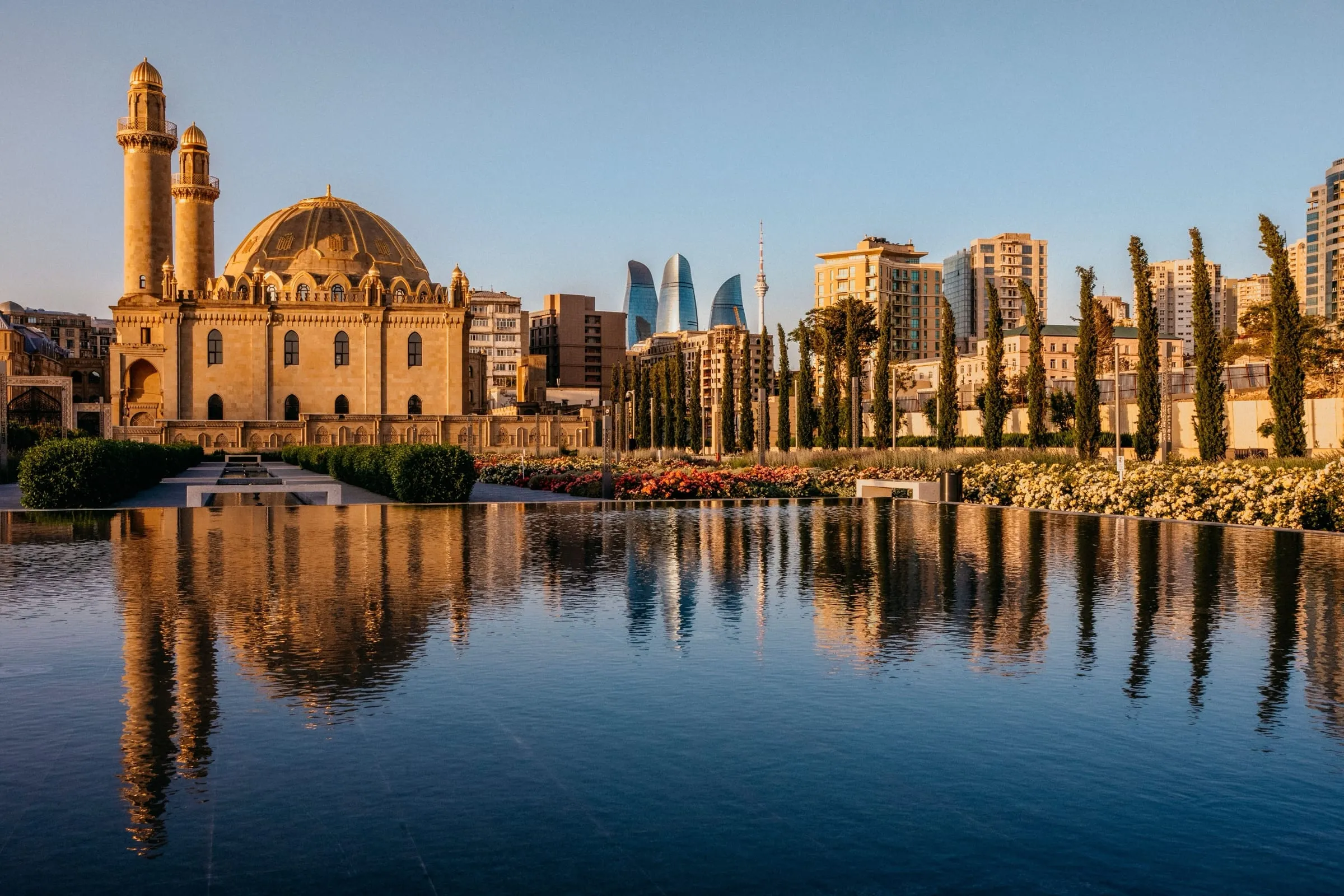
Baku
Azerbaijan's capital on the Caspian. A UNESCO-listed walled Old City ringed by modern towers and seafront parkland.
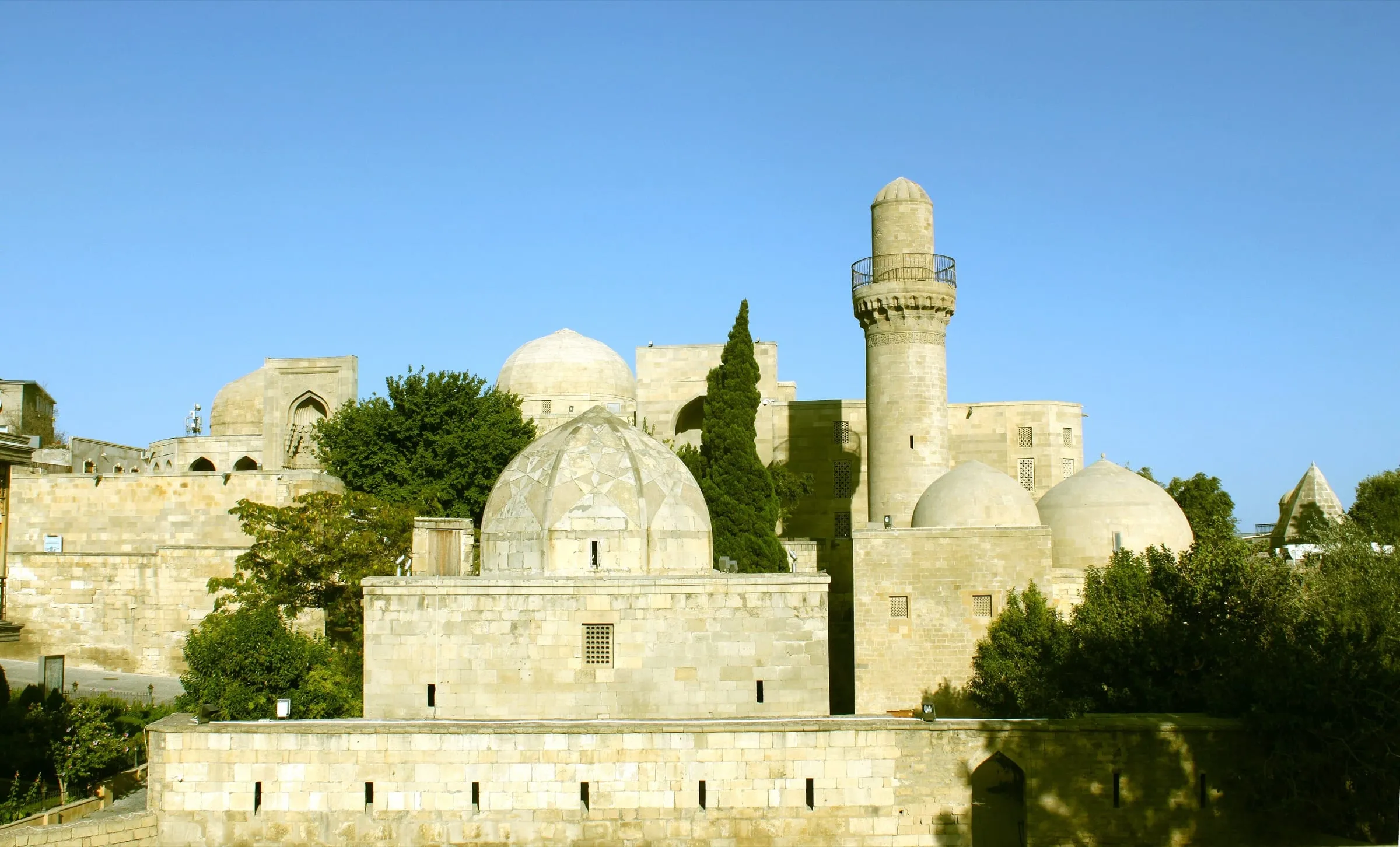
Palace of the Shirvanshahs
The 15th-century seat of the Shirvan rulers, and the largest surviving monument of the Shirvan-Absheron architectural school.
Included in 3 tours
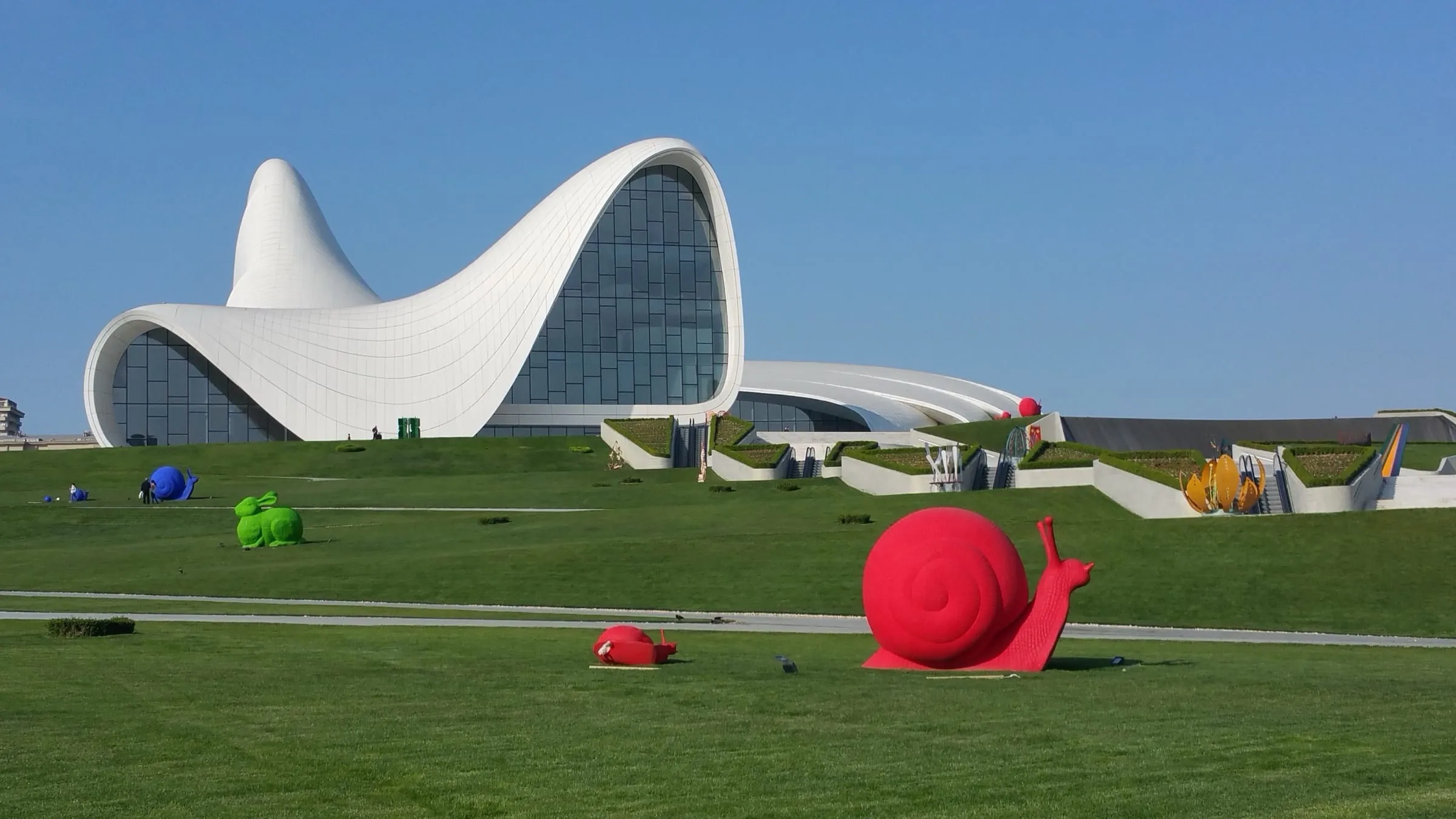
Heydar Aliyev Center
Zaha Hadid's landmark cultural building. A continuous white curve with no straight lines.
Included in 3 tours
Ready to plan your trip?
Tell us your dates and group size and we will put together the right itinerary and vehicle.
Or call +994 77 199 17 55 , 08:00 to 20:00, 7 days a week