
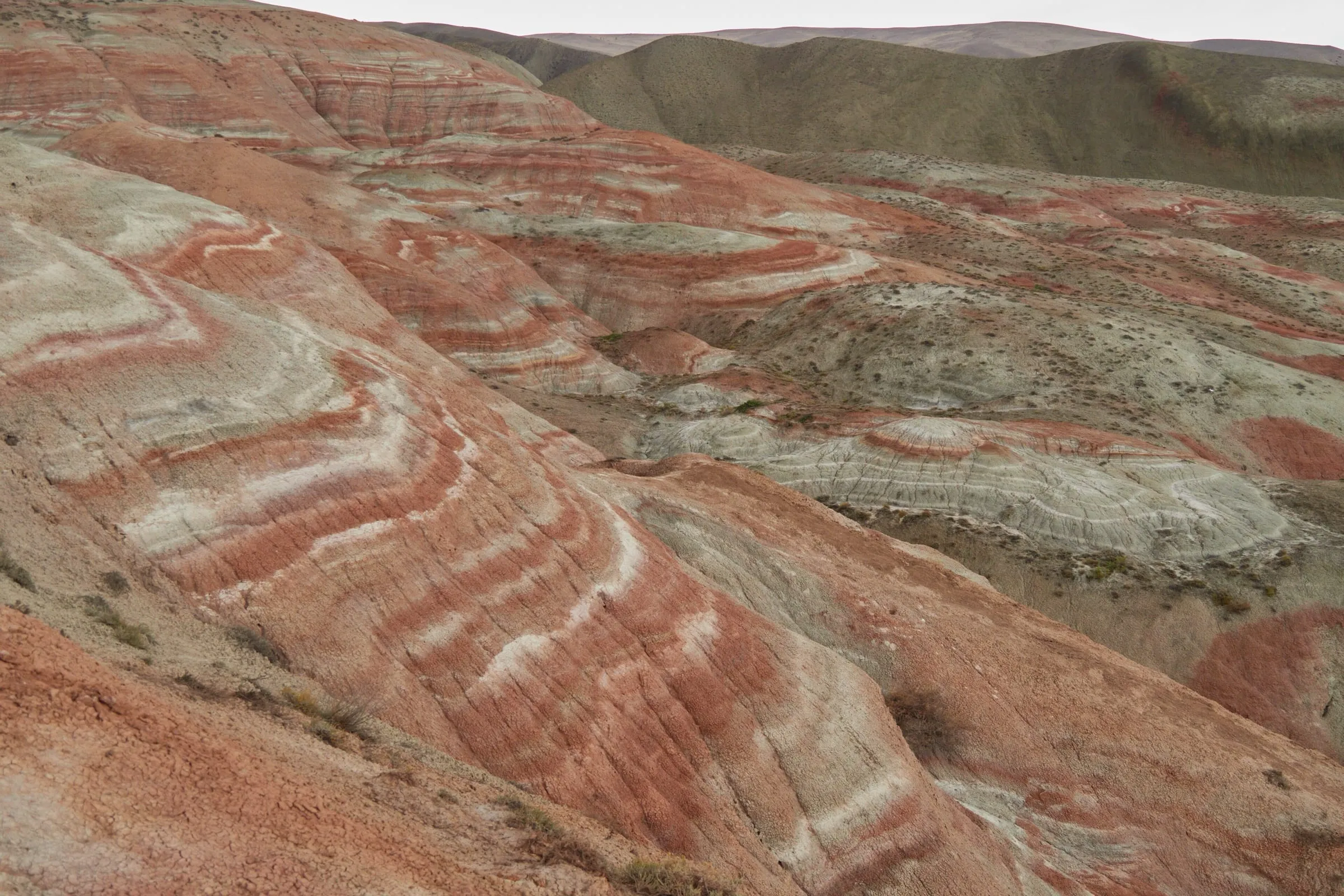
Candy Cane Mountains
Striped red-and-white hills on the road to Shahdag, coloured by iron-rich sedimentary banding.
Included in 5 tours
Quba
One of the highest continuously inhabited villages in Europe, at around 2,300 metres in the Greater Caucasus.
Khinaliq sits at roughly 2,300 metres in the mountains above Quba, and it is among the highest continuously inhabited settlements in Europe. People have lived here for thousands of years, on a ridge with mountains on every side and a single road in.
What makes it remarkable is not only the altitude. The village has its own language, Khinalug, which belongs to the Northeast Caucasian family and is spoken nowhere else on earth by perhaps a couple of thousand people. It is not a dialect of Azerbaijani. It is unrelated to it.
In 2023 UNESCO inscribed the cultural landscape around Khinaliq and the transhumance route its shepherds have used for centuries on the World Heritage list, recognising a way of life rather than a monument.
The road climbs from Quba through a gorge and then up onto the high pasture, and it takes well over an hour from the town even in good conditions. It is paved for most of its length now, which is a recent development, but it is a mountain road with the drops and the weather that implies.
From roughly October to April a four wheel drive is required, and in a bad winter the road closes outright. This is not a formality. Snow at this altitude arrives early and leaves late, and the village is genuinely cut off for parts of the year.
The drive is the reason to come as much as the destination. You climb out of orchards into bare rock and then onto grassland above the treeline, with the main Caucasus range opening up behind. Shepherds move flocks along the same route they have used for centuries, which is the practice UNESCO recognised.
Khinaliq is built in terraces on the slope, the houses stacked so that the flat roof of one serves as the yard of the one above. The walls are stone and the construction is old, and the effect from below is of a single structure rather than separate buildings.
There is a small museum, a mosque, and a cemetery with stones that reward a slow look. Dung bricks dry in stacks against the walls through the summer, which is the fuel at an altitude with no trees.
People live here. It is not an open air museum, and the usual courtesies apply: ask before photographing anyone, and expect to be offered tea if you fall into conversation.
Khinalug is a language isolate within its family, with no close relatives, and its survival in a village of this size is the kind of thing linguists travel to study. Most residents also speak Azerbaijani, and some Russian.
The community has been here long enough that its origins are argued about rather than known. Local tradition reaches back millennia, and the archaeological picture supports great antiquity even where it cannot be precise.
The economy is sheep. The transhumance route that UNESCO listed runs from these high pastures down to winter grazing on the plains, and that seasonal movement is the organising fact of life here.
It is cold. At 2,300 metres the temperature is well below what Baku is doing on the same day, and the wind on the ridge is constant. Bring more than you think you need, in any season.
Facilities are minimal. There are a few guesthouses and a small shop or two. Do not expect restaurants, and do not expect reliable mobile signal.
Altitude affects some people. The climb is in a vehicle rather than on foot so acclimatisation is quick, but if you are sensitive, take the first hour slowly.
Not included: hotel accommodation, airline tickets, entry tickets to sites and museums, meals beyond the welcome breakfast and daily refreshments.
Around 2,300 metres, which makes it one of the highest continuously inhabited settlements in Europe. The temperature is far below Baku on the same day and the wind on the ridge is constant.
By road from Quba, climbing through a gorge onto the high pasture, which takes well over an hour each way in good conditions. A four wheel drive is required from roughly October to April and the road can close outright in a bad winter.
Khinalug, a Northeast Caucasian language spoken nowhere else and unrelated to Azerbaijani. Most residents also speak Azerbaijani and some Russian.
Yes. The cultural landscape around the village and the transhumance route its shepherds use were inscribed on the World Heritage list in 2023, recognising a living way of life rather than a single monument.
Sometimes, and never casually. A four wheel drive is necessary from around October to April and heavy snow can close the road completely. We will tell you honestly what is reachable on your dates rather than promising the village regardless.
Striped red-and-white hills on the road to Shahdag, coloured by iron-rich sedimentary banding.
Included in 5 tours
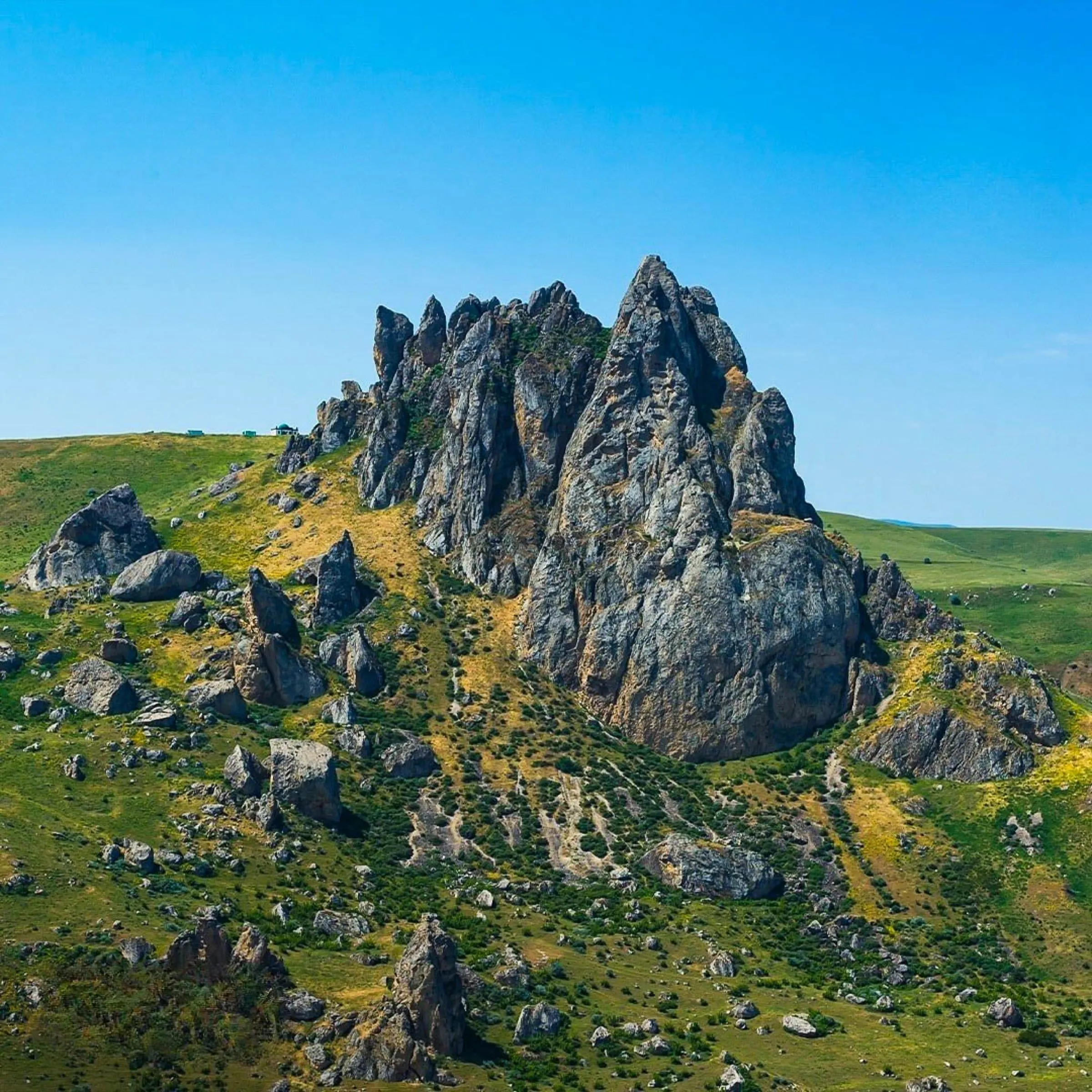
A five-pronged limestone outcrop rising beside the northern highway, and a long-standing pilgrimage site.
Included in 5 tours
We build private itineraries around the places you actually want to see. Tell us what interests you and we will price it per vehicle.
Or call +994 77 199 17 55 , 08:00 to 20:00, 7 days a week