
Food and drink
What to Eat in Baku: A Local Guide to Azerbaijani Food
The dishes worth ordering, where locals actually eat, and what a meal costs in Baku.
Azerbaijani food sits on a crossroads, and it tastes like it. There is Persian influence in the rice and the fruit, Turkish influence in the grills and the pastry, Russian influence in the soups and the salads, and something underneath all of it that belongs to nowhere else. Saffron, sour plum, pomegranate, and a national conviction that a meal without fresh herbs on the table is an unfinished meal.
Our drivers eat two meals a day on the road, which makes them an unusually well informed and unusually opinionated source on this subject. What follows is what they actually order, where they actually stop, and the handful of things they will quietly steer you away from.
The short version
- Plov is the national dish and the version worth seeking out is shah plov, baked inside a crust of flatbread and brought to the table whole.
- Lunch is the main meal. Restaurants are busiest between one and three in the afternoon, and that is when the food is freshest.
- Tea is not an after dinner drink here. It is offered constantly, served with jam rather than milk, and refusing the first glass reads as odd.
- Most restaurants in Baku are halal by default. Alcohol is widely available and entirely unremarkable, which surprises some visitors.
- Portions are large and sharing is normal. Order fewer dishes than you think you need, then order again.
The dishes that define the cuisine
Plov is the one to start with. Azerbaijani plov is not the single pot dish you may know from Central Asia. The rice is steamed separately and stays in distinct grains, stained gold with saffron, and the meat or fruit topping arrives alongside rather than mixed through. There are said to be more than forty regional versions. If you see shah plov on a menu, order it: the whole thing is baked inside a shell of thin flatbread and brought out looking like a crown, and it is the dish most worth photographing before you ruin it.
Dolma covers anything wrapped or stuffed. Grape leaves in spring, cabbage leaves in winter, and in summer the version locals rate highest, badimjan dolma, which is aubergine, tomato and pepper each stuffed and steamed together in one pot. Azerbaijani dolma carries UNESCO intangible heritage status, which tells you how seriously it is taken.
Qutab is the everyday food you will eat most often without planning to. A paper thin pancake folded over a filling, cooked dry on a griddle, served hot with sumac to scatter over it. Fillings are usually greens, pumpkin, minced lamb or soft cheese. It costs very little, it is everywhere, and it is the single best thing to eat standing up in Azerbaijan.
Kebab needs no explanation but does need a distinction. Lula kebab is minced and hand pressed onto the skewer. Tika kebab is chunks of lamb. The one to ask about is the seasonal vegetable kebab, where aubergine, tomato and pepper are grilled whole over the same coals until the skins blister, then peeled and chopped at the table into a smoky mash called mangal salat.
Lavangi is the one most visitors never hear about and the one worth asking for. It comes from Lankaran in the humid south, and it is chicken or fish stuffed with a dense paste of ground walnut, onion and sour plum, then roasted whole. The southern regions cook with walnut and fruit in a way the rest of the country does not, and lavangi is the clearest expression of it.
Then the soups, which are a genuine course rather than a starter. Piti is lamb, chickpeas and chestnut slow cooked in a sealed clay pot and served in two stages: you pour the broth off into a bowl, eat that with torn bread, then mash what is left in the pot and eat it as a second dish. Dushbara is the opposite, a clear broth full of dumplings small enough that a skilled cook fits several onto a spoon, and the traditional boast is that the smaller the dumpling the better the cook.
Best restaurants in Baku, and where locals actually eat
The most reliable rule in Baku is the same as anywhere: distance from the obvious landmark is inversely proportional to value. The restaurants ringing the walls of the Old City and the ones facing the Boulevard are not bad, but you are paying a considerable premium for the view and the convenience.
Walk ten minutes inland and the prices fall by roughly half for food that is frequently better. The streets around Fountains Square and the blocks behind Nizami Street carry a dense concentration of places that serve locals at lunch, and a room full of people on their break is the only restaurant review that has ever mattered.
For the traditional end of the spectrum, look for places calling themselves a tandir bakery or an ocaqbasi, which means the grill is in the room with you. For piti specifically, the best versions in Baku come from restaurants that advertise it by name, because the dish takes hours and nobody makes it casually.
Outside the capital the question changes completely. On the road to Quba and Shahdag, roadside places serve mountain lamb and fresh trout that would be expensive anywhere else. Around Gabala the speciality is forest honey and the local walnut preserves. In Sheki you eat piti, and specifically Sheki piti, which most Azerbaijanis will tell you is the original and the standard against which the Baku versions are judged. Ask your driver where he stops. He has strong views and no commercial interest in the answer.
Breakfast, and why it is worth getting up for
The Azerbaijani breakfast is a spread rather than a plate. White cheese, butter, several kinds of jam, honey in the comb, olives, cucumber and tomato, bread straight from a tandir oven, and eggs cooked in a pan with tomato that goes by the name pomidor yumurta.
The jams are the part visitors remember. Fig, white cherry, quince, rose petal, and in the north, walnut, where whole green walnuts are preserved until they turn black and taste like nothing else. You eat them with a spoon alongside tea rather than spreading them on anything.
Most hotels serve a version of this. The better version is at a dedicated breakfast house, several of which cluster in the streets north of Fountains Square and fill up with families at the weekend.
Tea, and the etiquette around it
Tea in Azerbaijan is constant. It arrives when you sit down, when you finish eating, when you enter a carpet shop, and when you visit somebody's office. It comes black, strong, in a small waisted glass called an armudu, and it is served with sugar or jam rather than milk.
The traditional method is to hold a sugar cube between your teeth and draw the tea through it. Nobody expects a visitor to do this, but doing it once is appreciated in the same way as attempting a phrase in the language.
Tea houses, chaykhana, remain a real institution rather than a preserved one, though traditionally a male one. They are where backgammon is played and arguments are had, and in the mountain towns they are frequently the most interesting room in the settlement. You can sit in one for an hour over a single pot.
Dietary requirements, honestly assessed
Halal is the default rather than a special request. Azerbaijan is a majority Muslim country and the overwhelming majority of restaurants serve halal meat without advertising the fact, because there is nothing to advertise. Pork appears mainly in Russian and European restaurants, which label themselves clearly.
Alcohol is served openly and widely, including in most traditional restaurants. Azerbaijan has a serious wine industry centred on Shamakhi and Ganja, and local wine is both good and inexpensive. Visitors from the Gulf are sometimes surprised by how unremarkable this is; the country is secular in practice and nobody will comment either way on what you drink.
Vegetarians do better than they expect and worse than they might hope. The herb, cheese and pumpkin qutabs, most of the salads, the aubergine dishes, dovga, which is a yoghurt and herb soup, and the entire breakfast spread are all genuinely meat free. The difficulty is that broth is used liberally, so ask specifically rather than assuming. Vegans will find it hard outside the capital, since dairy is in almost everything.
Nut allergies deserve real caution here. Walnuts in particular appear in sauces, sweets and preserves where you would not look for them. Learn the word qoz and show it written down.
Sweets, and the ones worth the queue
Azerbaijani pakhlava is not Turkish baklava. It is cut into diamonds, built on ground nuts rather than dough alone, topped with a single whole hazelnut or walnut, and coloured with saffron. It is less syrupy and, to most palates, less sweet.
Sheki halva is its own category and its own pilgrimage. Made in Sheki from rice flour threads, nuts and syrup, it is dense, faintly floral and unlike anything else in the region. It travels well and keeps for weeks, which makes it the most practical edible thing to carry home.
Shekerbura, a crescent pastry filled with ground nuts and cardamom, appears everywhere around Novruz in March but is sold year round in the better bakeries. So is badambura, its almond cousin.
What a meal actually costs
Eating in Baku is inexpensive by European standards and moderate by Gulf standards. A qutab from a street counter is pocket change. A full lunch with soup, a main and tea at a local restaurant away from the tourist streets is modest. A dinner at a good restaurant in the centre with wine costs a fraction of the equivalent in Dubai, Istanbul or any European capital.
The exceptions are the places you are most likely to walk past first: the terraces facing the Boulevard, the restaurants built into the Old City walls, and anywhere with an English menu displayed outside and somebody standing beside it. None of these are a rip off, but you are paying two or three times the local rate.
Tipping is not obligatory and is not built into the culture in the way it is in North America. Rounding up, or ten per cent at a proper restaurant, is generous and normal. Check the bill, because some restaurants in the centre add a service charge and you should not pay twice.
One practical note. Cards work in almost every restaurant in Baku. In the mountains, at roadside stops, and at the bazaars, carry cash in manat.
Fitting food into a tour day
The reason this matters on a tour is timing. Azerbaijani lunch runs from roughly one until three, and the traditional dishes that take hours to cook are at their best then. A day planned so that you are driving during that window and eating at four is a day where you eat worse food.
Because every tour we run is private, the schedule bends around this. Tell the driver you want to eat properly and he will build the route so that you reach a good stop at the right time, which on the mountain routes frequently means a place you would never have found and could not have booked.
On the longer itineraries this becomes part of the trip rather than an interruption to it. The Grand Azerbaijan Tour passes through the three regions with the most distinct food in the country, and eating Sheki piti in Sheki is a materially different experience from eating it in Baku.
Frequently asked questions
What is the national dish of Azerbaijan?
Plov, a saffron rice dish served with a separate meat or fruit topping. The version most worth seeking out is shah plov, baked inside a crust of flatbread and brought to the table whole.
Is food in Baku halal?
Almost universally, and without being advertised as such, since Azerbaijan is a majority Muslim country. Pork appears mainly in Russian and European restaurants, which identify themselves clearly. Alcohol is also served openly in most restaurants, which surprises some visitors.
What are the best restaurants in Baku?
The reliable rule is that value improves with distance from the obvious landmark. The terraces facing the Boulevard and the restaurants built into the Old City walls charge two or three times the local rate. Walk ten minutes inland, towards the streets behind Nizami Street and around Fountains Square, and you will eat better for roughly half the price. Look for an ocaqbasi, which means the grill is in the room with you.
What is qutab?
A paper thin pancake folded over a filling and cooked dry on a griddle, served hot with sumac. Fillings are usually greens, pumpkin, minced lamb or soft cheese. It is cheap, it is everywhere, and it is the single best thing to eat standing up in Azerbaijan.
What is piti and where is the best one?
Lamb, chickpeas and chestnut slow cooked in a sealed clay pot, eaten in two stages: the broth first with torn bread, then the mashed contents as a second dish. Sheki piti is widely regarded as the original and the standard the Baku versions are judged against.
Is Baku expensive for food?
No, by European standards it is inexpensive. The exceptions are the restaurants facing the Boulevard and those built into the Old City walls, where you pay two or three times the local rate for the location. Walking ten minutes inland roughly halves the price.
What should a vegetarian eat in Azerbaijan?
Herb, cheese and pumpkin qutabs, the aubergine dishes, dovga yoghurt soup, most salads and the entire breakfast spread are genuinely meat free. Ask specifically about broth, which is used liberally. Vegans will find it difficult outside Baku because dairy is in almost everything.
What is the best Azerbaijani dessert?
Sheki halva, made from rice flour threads and nuts in the town of Sheki, is the one most worth travelling for. Azerbaijani pakhlava, which is diamond cut and built on ground nuts rather than dough alone, is the most widely available.
Do I tip in restaurants in Azerbaijan?
It is not obligatory. Rounding up, or around ten per cent at a proper restaurant, is normal and generous. Check the bill first, as some restaurants in the centre already add a service charge.
Places mentioned in this guide
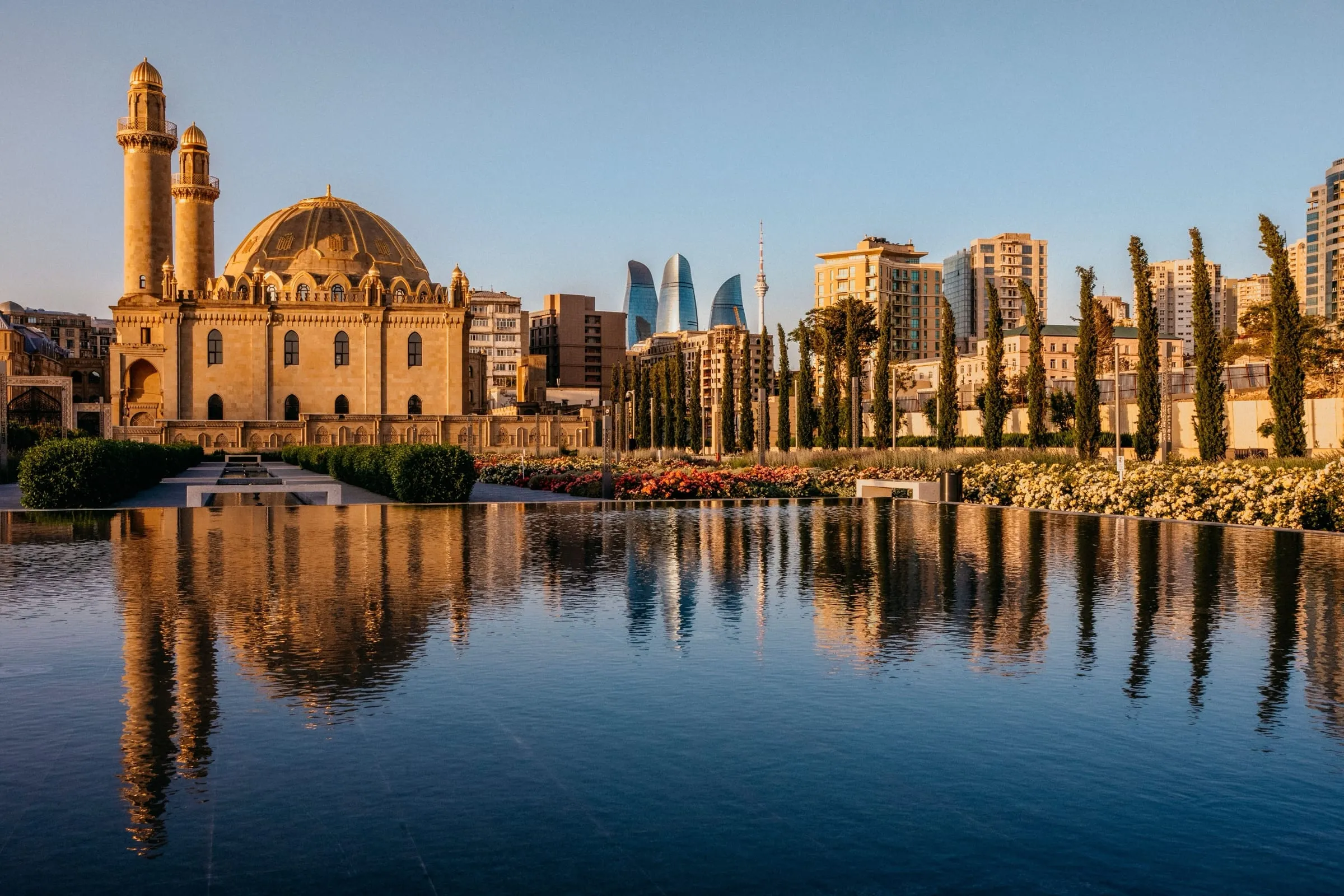
Baku
Azerbaijan's capital on the Caspian. A UNESCO-listed walled Old City ringed by modern towers and seafront parkland.
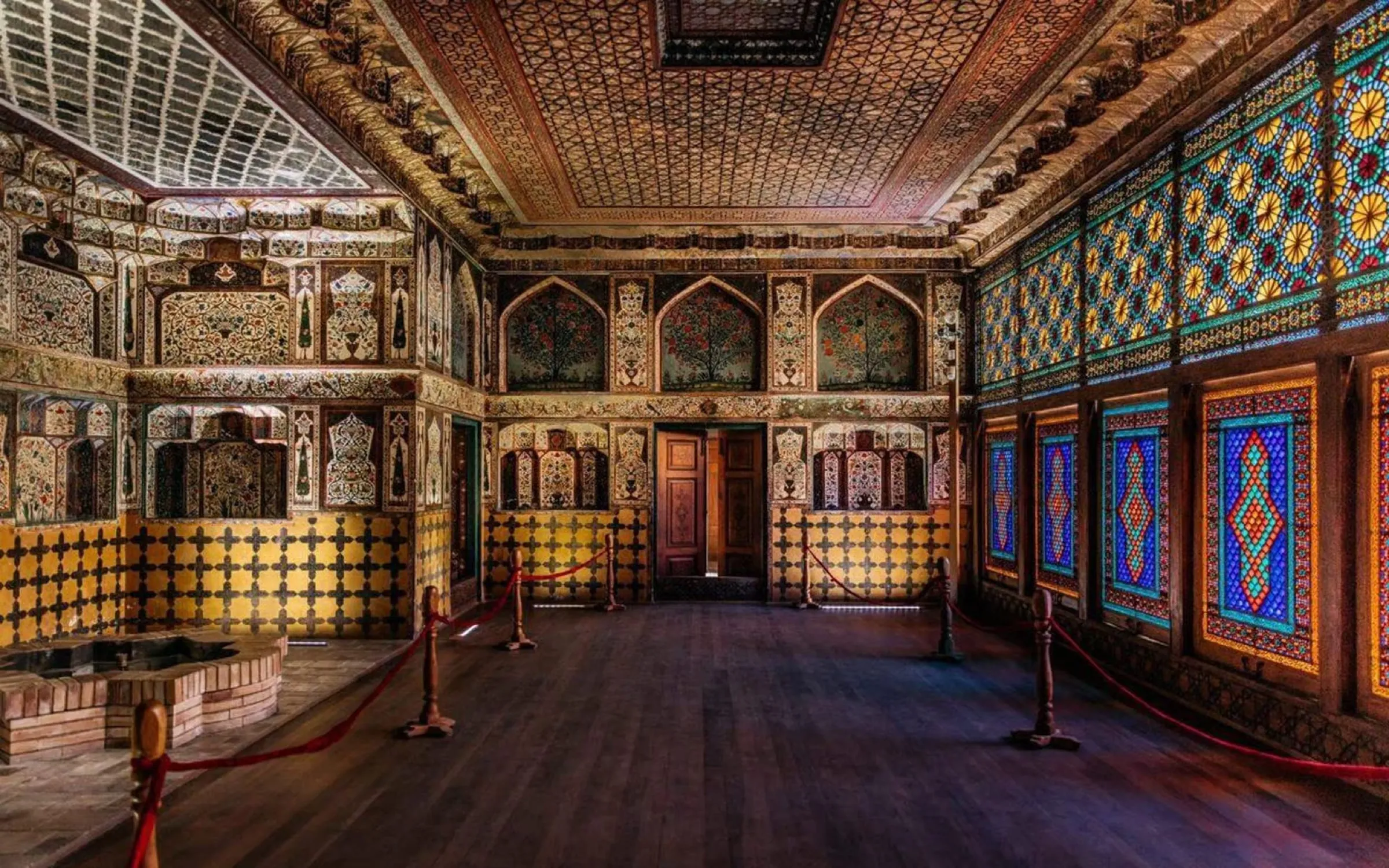
Sheki
UNESCO-listed Silk Road town in the Caucasus foothills, famous for the Khan's Palace and its stained-glass shebeke windows.
Included in 2 tours
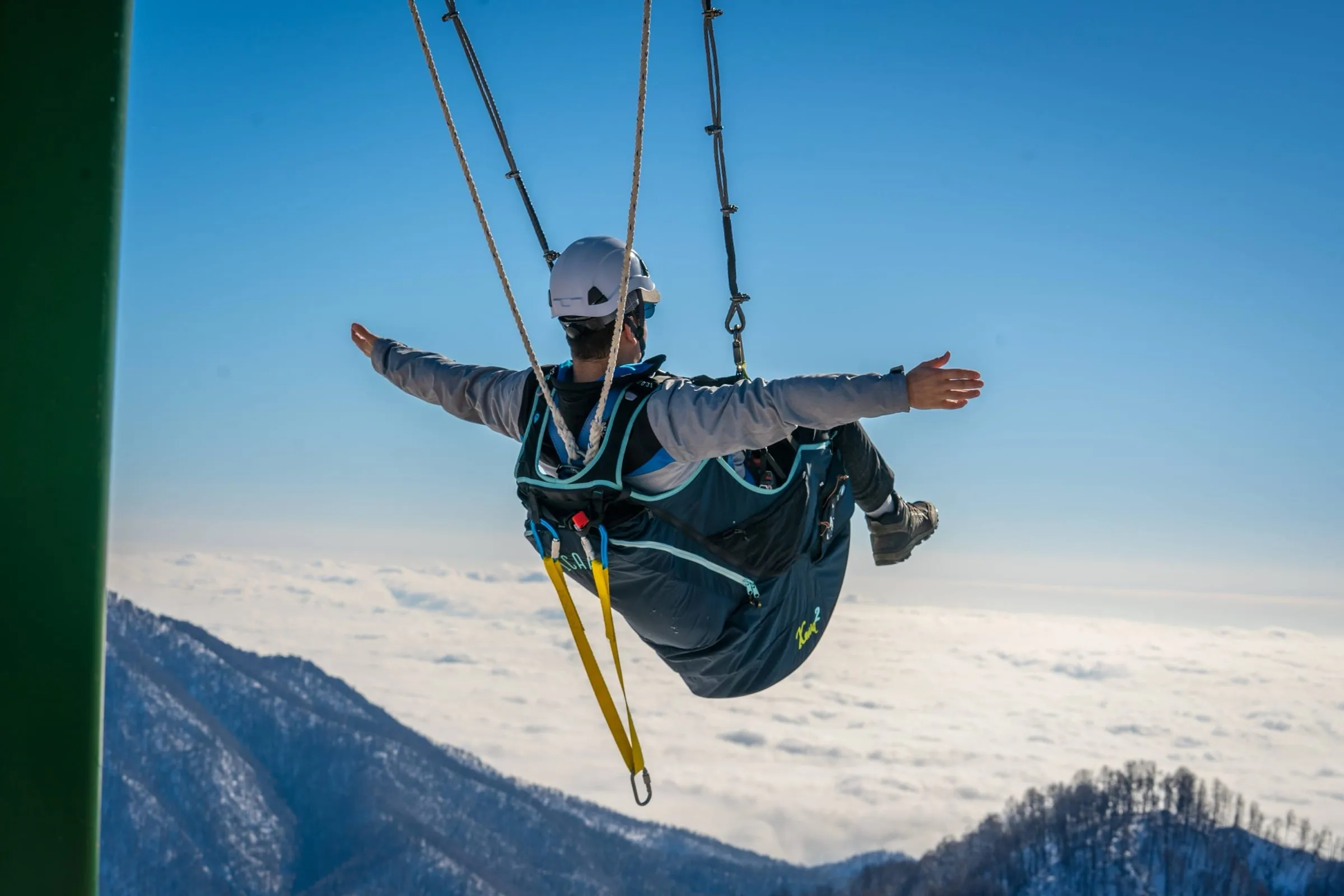
Gabala
Forested foothills resort town in the Greater Caucasus. Cable cars, waterfalls, lakes and wine country nearby.
Included in 5 tours
Ready to plan your trip?
Tell us your dates and group size and we will put together the right itinerary and vehicle.
Or call +994 77 199 17 55 , 08:00 to 20:00, 7 days a week